What does a Speech Pathology Language Assessment Involve?
Published: 8 October 2026
Has your child been referred for a language assessment by their GP, Paediatrician, school teacher or childcare educator, or you? Starting a speech pathology journey can feel overwhelming, but knowing exactly what to expect can help ease your mind. Don’t stress, we’ve got you covered with an overview, so you can relax. You are in the right hands!

Rapport Building
If your child is shy around new people, or particularly anxious, your clinician will spend a few minutes of the initial meeting getting your child comfortable by playing a fun game together. It is important to start off building rapport, so that your child can feel at ease for the assessment. The clinic space will feel warm and inviting, so that your child can differentiate the space from a typical doctor’s office.
Case History
Before your appointment, you’ll complete a short intake form online. This helps your speech pathologist understand your child's background, medical history, and current communication style. We choose the exact standardised tests, informal play-based tools, or language tasks that match your child's age and specific needs. At the start of the session, the speech pathologist will chat briefly to fill in any gaps and talk through your main goals or concerns. We want to understand the whole picture, and your insights help us collaborate and see how your child communicates in everyday life, not just in a clinical setting.
Early Language Assessment (Toddlers)
An early language assessment is play-based, warm, and child-led. Conducted in a natural, welcoming environment, the speech pathologist will join your toddler on the floor to play with a range of age-appropriate toys, blow bubbles, read books, or sing songs. While they interact, the clinician carefully observes how your child communicates in this naturalistic setting by looking at their receptive, expressive and social language. They will look at how your child follows simple directions, uses eye contact, gestures and other nonverbal communication to communicate. They will assess their ability to imitate sounds, and use single words or word-combinations to request their favourite toys and actions. This play-based approach takes the pressure off your little one, allowing us to gather an accurate, authentic picture of their strengths, language and communication skills in everyday life.

Preschool aged Assessment
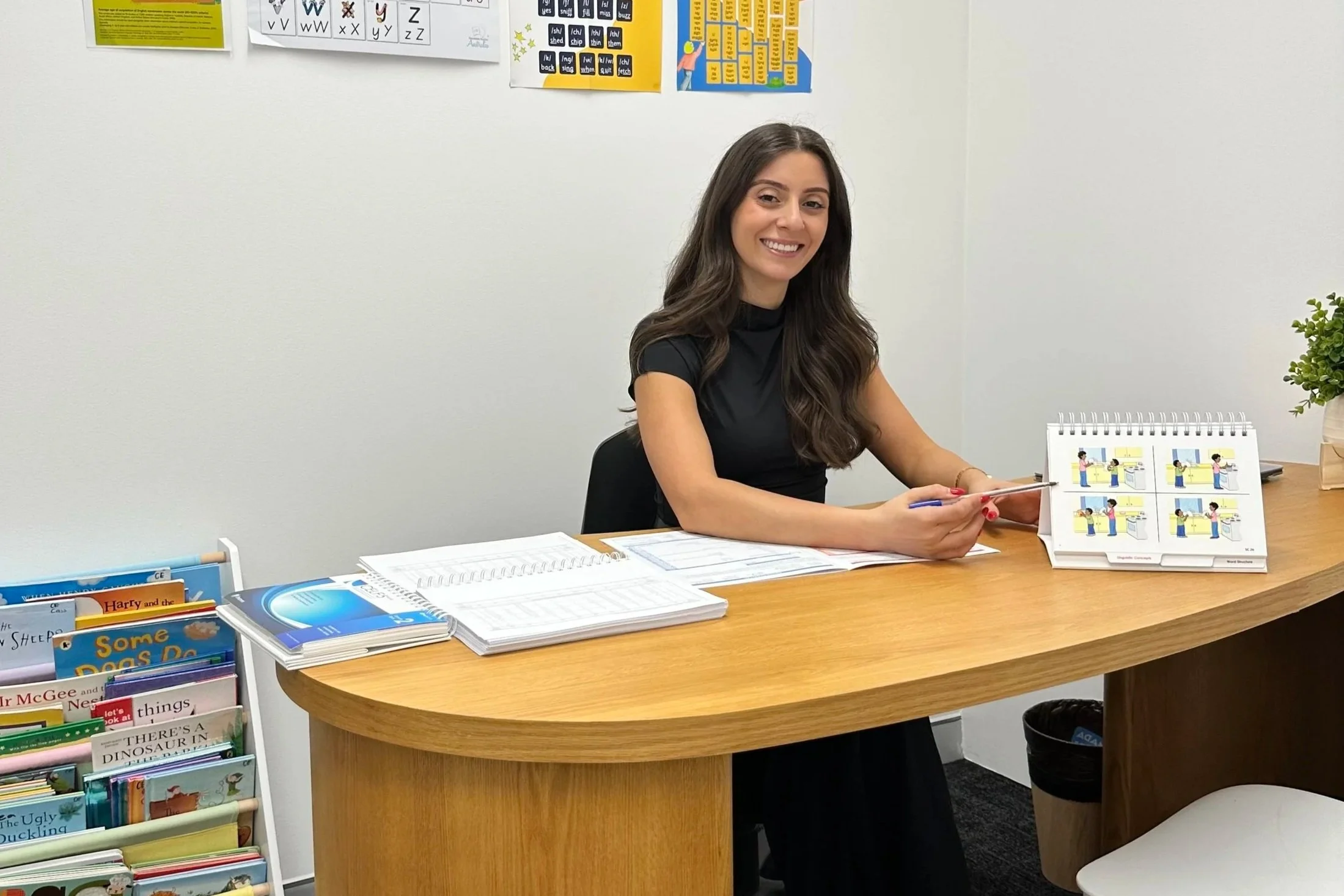
For preschool kids (ages 3 to 6), we use the CELF Preschool-3 (Clinical Evaluation of Language Fundamentals Preschool-Third Edition), a standard assessment in the style of a structured picture book. This child-friendly tool measures receptive language (how well they understand words and instructions) and expressive language (how they use vocabulary and build sentences). It gives us a clear map of their strengths and areas where they might need extra support before starting school.
School aged Assessment
For school-aged children and teenagers, we use the CELF-5 (Clinical Evaluation of Language Fundamentals, Fifth Edition), a standardised, structured and interactive tool that looks closely at the advanced language skills needed for the classroom. It measures how well your child understands complex instructions, builds mature sentences, recalls spoken details, and uses language socially (pragmatics). This gives us a highly accurate, clear picture of how language impacts their learning, reading, and confidence at school, and helps us to formulate meaningful therapy goals.
Written by Speech Pathologist Dana
Speech and Growth Clinic