Late Talkers and Speech Pathology
Last Updated: 16th January 2026
What is a Late Talker?
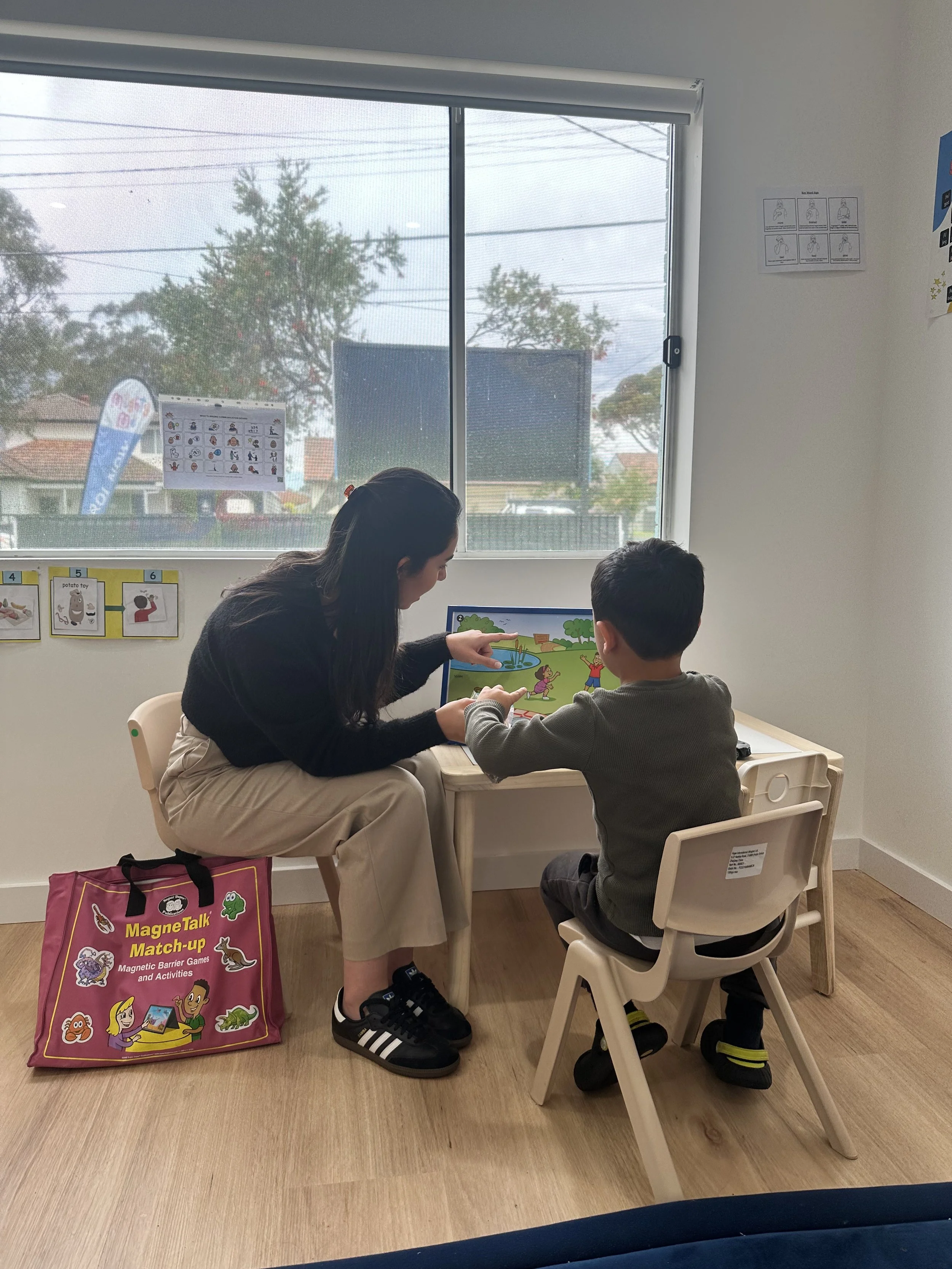
A late talker is a child who is developing typically in other areas (like receptive skills - understanding language, play and social skills, and motor skills - walking and other physical milestones), but is behind their peers in talking and expressive language. They might have a limited vocabulary, struggle to combine words, or be hard to understand.
What Counts as a Late Talker?
18-24 months: Less than 50 single words or is not yet joining 2-word combinations
2-3 years: Limited vocabulary, difficulty combining words, or hard to understand
3+ years: Struggling to communicate effectively, with limited sentence structure or persistent speech errors
When Should I Seek Intervention for my Child?
If you have concerns about your child's speech or language, don't wait! Research shows early intervention can make a big difference and plays a crucial part in ‘catching up’ to peers. Consult a speech pathologist if:
Your child is 18-24 months and not meeting speech milestones (e.g. not combining words, reduced vocabulary)
Your child is 2+ years and struggling to communicate effectively
You have general concerns about their speech, language, or communication
How Does a Speech Pathologist Help?
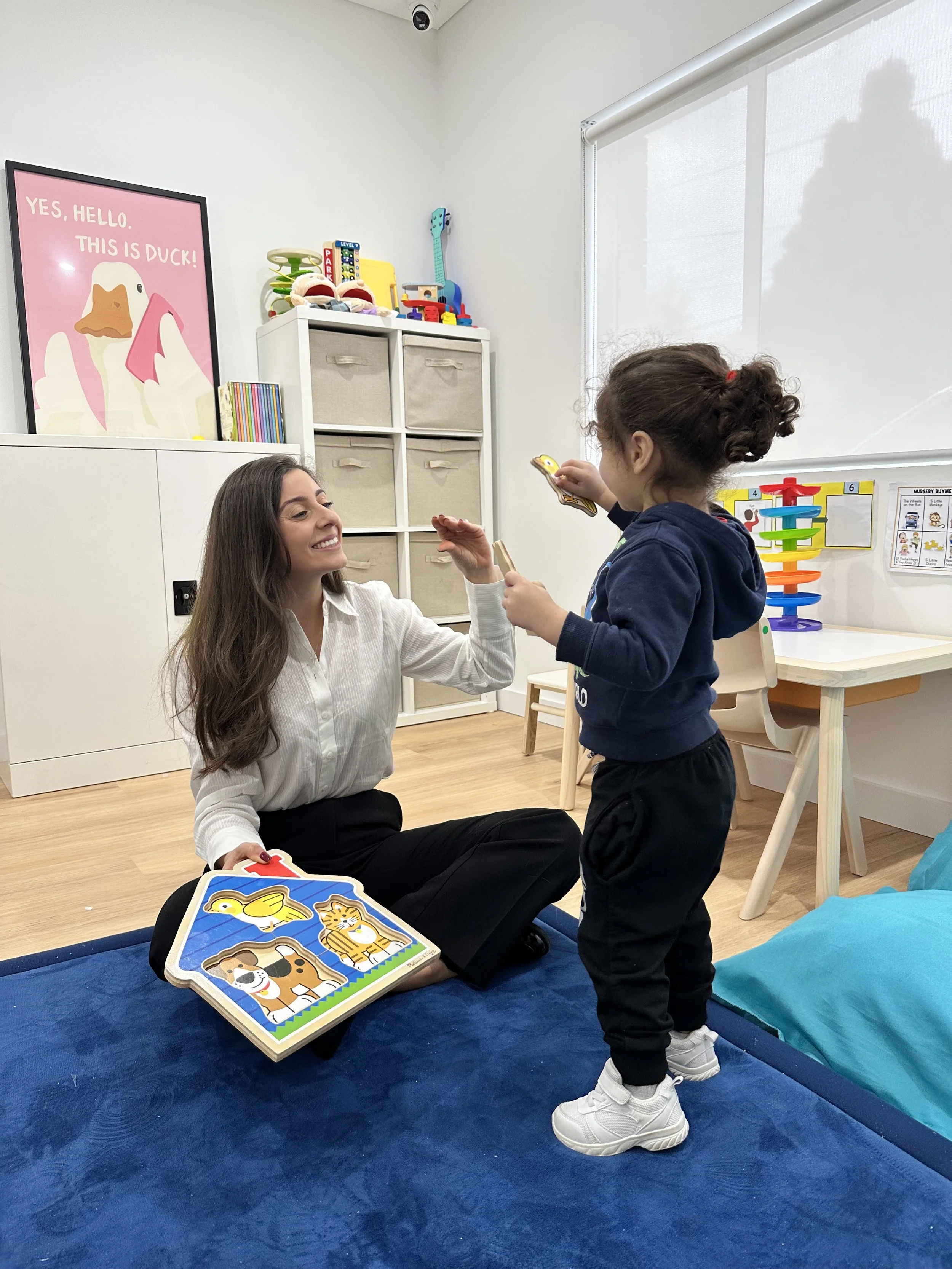
A speech pathologist will:
Assess your child's receptive and expressive language and communication skills
Identify strengths and areas for support
Develop a personalised plan for intervention and sessions moving forward
Work with your child to improve communication skills, such as:
- Vocabulary building
- Sentence structure
- Expanding sentence length and complexity
- Articulation and speech clarity
- Social communication
- Collaborate with you to support their progress in their contexts such as home and daycare/ preschool. It is essential that practise is carried out at home for even 5-10 minutes a day, to generalise your child’s goals and transfer their newly learned skills out of the clinic!
Early intervention can make an enormous difference and facilitate your child’s expressive language. If you have concerns, reach out to a speech pathologist for guidance and support! Our friendly Leichhardt speech therapists are more than happy to answer any questions.
Useful Links:
https://www.hanen.org/home The Hanen Centre.
Written by Speech Pathologist Dana
Speech and Growth Clinic